
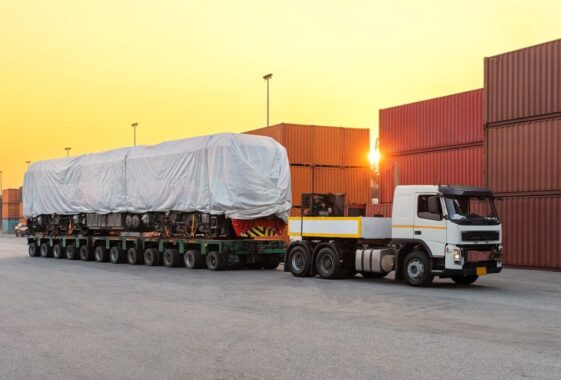
Multi axle trailer transport has become an essential backbone of modern heavy logistics, especially for industries handling oversized, overweight, and complex cargo. From energy infrastructure to industrial manufacturing and large-scale construction, the demand for reliable hauling solutions continues to rise rapidly in 2026. Multi axle trailer transport enables safe and efficient movement of massive loads that standard trucking systems cannot accommodate, making it a critical component of global supply chains.
Heavy Lux specializes in engineered logistics solutions that support demanding transport requirements through advanced equipment and precision planning. Multi axle trailer transport plays a central role in ensuring that heavy cargo reaches its destination safely, efficiently, and in compliance with transport regulations.
As industries expand and infrastructure projects grow in scale, the importance of structured, technology-driven transport solutions continues to increase.
Understanding Multi Axle Trailer Transport Systems
Multi axle trailer transport refers to the use of specialized trailers equipped with multiple axle lines designed to distribute heavy loads evenly across a wider surface area. This configuration reduces stress on roads and enhances stability during transportation of extremely heavy or oversized cargo.
Unlike standard trailers, multi axle systems are engineered to handle loads that can weigh hundreds of tons. The additional axles allow weight distribution across multiple points, reducing pressure per axle and improving control during movement.
Industries commonly relying on multi axle trailer transport include:
- Renewable energy projects such as wind turbine installations
- Oil and gas infrastructure and drilling equipment transport
- Large-scale construction projects and civil engineering structures
- Mining machinery relocation and industrial equipment delivery
Each operation requires detailed coordination, technical assessment, and route engineering to ensure safety and compliance.
Importance of Multi Axle Trailer Transport in Modern Logistics
Enhanced Safety for Heavy Cargo Movement
One of the primary advantages of multi axle trailer transport is its ability to significantly improve safety during heavy hauling. Weight distribution across multiple axles reduces the risk of structural failure, tipping, or road damage.
Cargo stability is further supported through hydraulic suspension systems that adjust dynamically to road conditions, ensuring balanced movement even on uneven terrain.
Compliance with Transportation Regulations
Governments enforce strict regulations on axle loads and road usage. Multi axle trailer transport allows operators to remain within legal weight limits while still transporting extremely heavy cargo.
Permit requirements often include:
- Route approval for oversized loads
- Bridge load capacity assessments
- Time-restricted transport schedules
- Escort vehicle coordination
Proper compliance reduces delays and ensures smooth transport operations.
Increased Efficiency in Heavy Hauling
Multi axle systems reduce the need for multiple trips by enabling single-load transportation of oversized equipment. This significantly improves operational efficiency and reduces fuel consumption over long distances.
Heavy Lux integrates planning strategies that optimize logistics routes and minimize downtime during transport execution.
Engineering Features of Multi Axle Trailer Transport
Modular Trailer Design Systems
Modern multi axle trailer transport systems often feature modular configurations. These allow trailers to be adjusted based on cargo size and weight requirements.
Modular systems provide flexibility for:
- Expanding axle lines for heavier loads
- Reducing configuration for smaller cargo
- Customizing height and width for clearance constraints
This adaptability makes them suitable for a wide range of industrial applications.
Hydraulic Suspension and Load Balancing
Hydraulic suspension technology is a key component in modern multi axle trailer transport. It ensures even weight distribution and allows operators to adjust trailer height depending on terrain conditions.
Benefits include:
- Improved road stability during transport
- Reduced impact on infrastructure
- Enhanced control on slopes and uneven surfaces
This technology is especially useful for remote or construction-heavy environments.
Advanced Steering Control Systems
Precision steering is another essential feature of multi axle trailer transport. Many trailers include electronically or hydraulically controlled steering systems that improve maneuverability.
These systems allow:
- Tight corner navigation in industrial zones
- Improved alignment in narrow roadways
- Reduced turning radius for oversized cargo
Such capabilities are critical when transporting large structures through urban or restricted environments.
High-Capacity Structural Engineering
Multi axle trailer transport systems are built using high-strength steel and reinforced frames designed to carry extreme loads. These engineering improvements ensure durability and long-term reliability under continuous heavy usage.
Load-bearing capacities are optimized through:
- Reinforced chassis structures
- High-grade suspension components
- Load distribution beam systems
Step-by-Step Multi Axle Trailer Transport Process
Successful heavy cargo movement requires a structured and carefully managed process.
1. Cargo Evaluation and Planning
The transport process begins with a detailed analysis of cargo specifications, including:
- Weight measurement
- Dimensional assessment
- Center of gravity calculation
This ensures proper trailer configuration and load stability.
2. Route Engineering and Surveying
Route planning is a critical part of multi axle trailer transport. Engineers assess:
- Road width and surface conditions
- Bridge load limits
- Overhead clearance restrictions
- Traffic flow and timing considerations
This step minimizes risk and avoids transportation disruptions.
3. Permit Acquisition and Compliance Checks
Oversized cargo transport requires multiple regulatory approvals. Documentation typically includes:
- Heavy load transport permits
- Environmental and road safety approvals
- Escort vehicle authorization
Proper compliance ensures legal and uninterrupted transport operations.
4. Equipment Configuration and Setup
Based on cargo requirements, the appropriate multi axle trailer configuration is selected. This includes adjusting axle lines, suspension settings, and steering mechanisms.
Heavy Lux applies technical precision to ensure optimal configuration for each transport operation.
5. Transport Execution and Monitoring
During transportation, real-time tracking systems monitor:
- Vehicle movement and speed
- Cargo stability
- Route conditions
Escort vehicles may also be used to guide traffic and ensure safety throughout the journey.
Industrial Applications of Multi Axle Trailer Transport
Multi axle trailer transport is widely used across several heavy industries that depend on large-scale logistics solutions.
Energy Sector Applications
The energy industry relies heavily on multi axle trailer transport for:
- Wind turbine blades and tower sections
- Power transformers and generators
- Oil drilling rigs and refinery components
These components often exceed standard transport limits, requiring specialized hauling systems.
Construction and Infrastructure Projects
Large infrastructure projects use multi axle trailer transport for:
- Steel beams and structural frameworks
- Precast concrete modules
- Heavy cranes and lifting equipment
Efficient transport ensures timely project completion and reduced construction delays.
Manufacturing and Industrial Relocation
Manufacturing facilities often require relocation or installation of heavy machinery. Multi axle trailer transport allows safe movement of:
- Industrial presses
- Production line systems
- Heavy fabrication equipment
Precision handling is essential to avoid equipment damage.
Mining and Resource Industries
Mining operations depend on heavy-duty transport for:
- Excavators and drilling machines
- Crushing and processing equipment
- Large extraction tools
Remote site accessibility makes multi axle systems particularly valuable.
Role of Heavy Lux in Advanced Transport Solutions
Heavy Lux provides engineered logistics support tailored to complex transport requirements. Multi axle trailer transport solutions are designed to meet modern industry demands with a focus on precision, safety, and operational efficiency.
Core capabilities include:
- Heavy cargo transport planning
- Route engineering and logistics coordination
- Specialized trailer configuration
- Compliance and permit management support
More details available at https://heavylux.com/
Future of Multi Axle Trailer Transport in 2026 and Beyond
The future of multi axle trailer transport is closely linked to advancements in automation, digital logistics, and smart transportation systems. Emerging technologies are improving efficiency and safety across heavy haul operations.
Key trends include:
- AI-based route optimization systems
- Smart trailer monitoring sensors
- Electric-assisted heavy haul vehicles
- Improved modular trailer engineering
These innovations are expected to further enhance reliability and reduce operational risks in heavy logistics.
Conclusion
Multi axle trailer transport remains a foundational element of modern heavy logistics, enabling industries to move oversized and complex cargo safely and efficiently. Its advanced engineering, regulatory compliance capabilities, and adaptability make it indispensable across energy, construction, manufacturing, and mining sectors.
As global infrastructure continues to expand, demand for specialized transport solutions will continue to grow. Companies that adopt advanced systems such as multi axle trailer transport gain significant advantages in efficiency, safety, and project reliability.
Heavy Lux continues to support these evolving industry needs by delivering precision-driven logistics solutions designed for the most demanding transport challenges.
Leave a Reply